Toward a Memorable Anatomy of Exceptional Patient Experience
Patient and Process Outcomes and Effective Actions
Toward a Memorable Anatomy of Exceptional Patient Experience: Rule #1, 4Fears, and 4Blocks
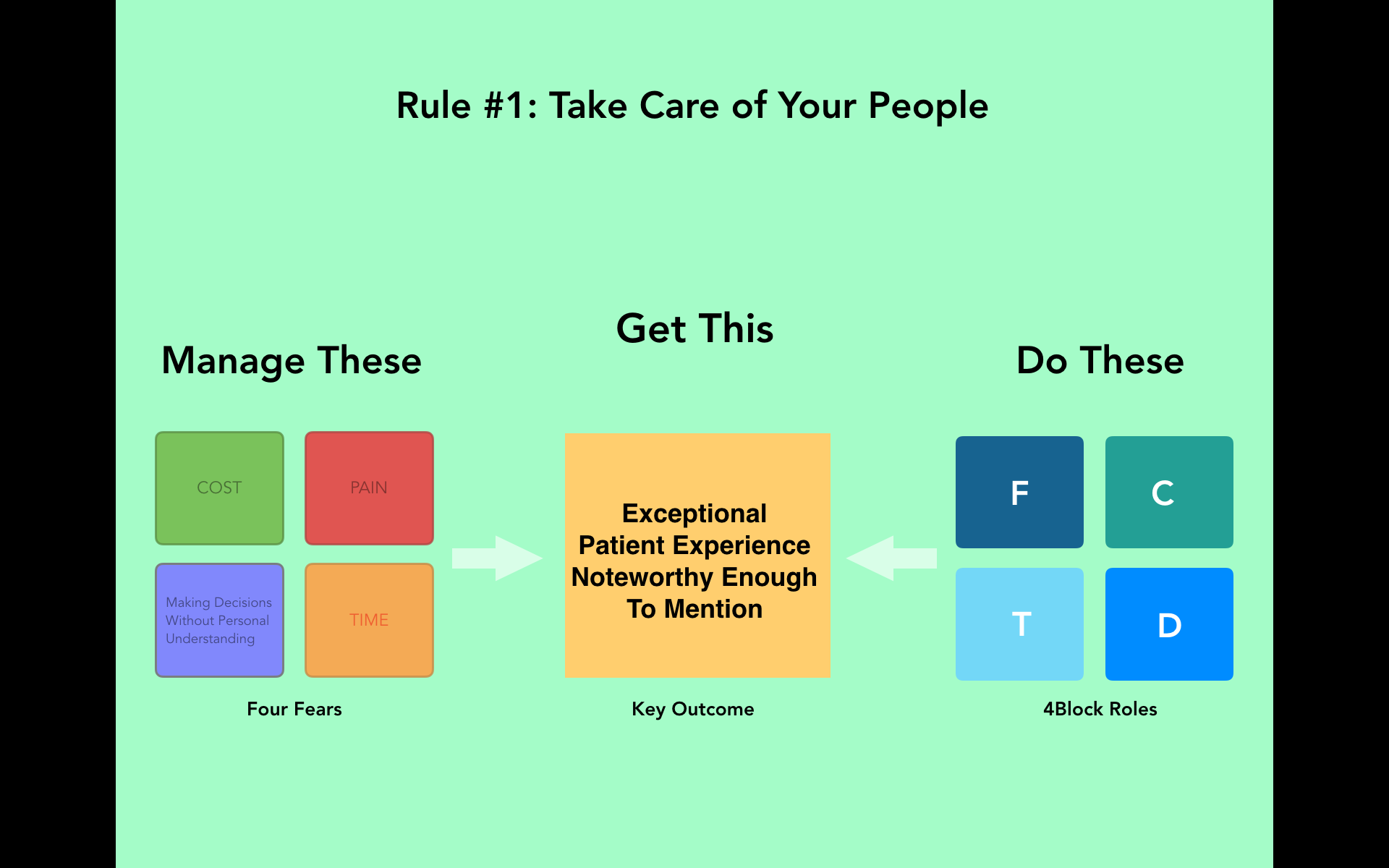
To make everything easy to communicate and understand, we worked backward from what we knew was the most important outcome: an exceptional experience of treatment and care that was noteworthy enough to mention, which leads to referrals as they told their story to friends, family, and coworkers. But how to achieve this predictably?
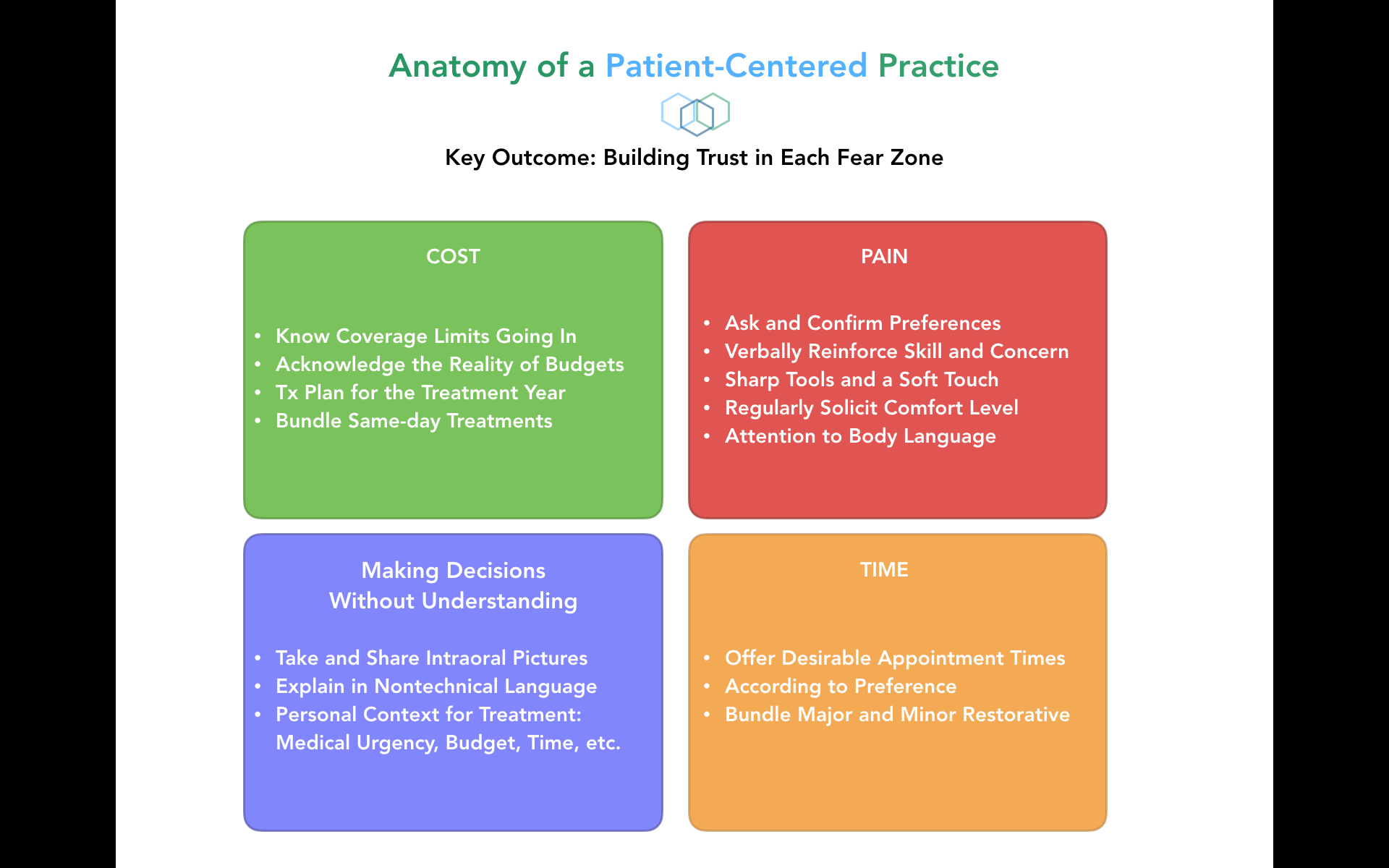
First, we reduced everything down to the overall patterns. The key outcome required us to handle and ameliorate 4 universal fears that patients all posses in some proportion or another, all of which are permutations of the loss of control inherent in medical treatment.
They are:
Fear of Pain
Fear of Losing Time
Fear of Expense, and
Fear of Making Decisions Without Full Understanding
The practice as a whole must work within those guidelines and manage those fears as they manifest in each individual patient. Because of this, we always emphasized the importance of face-to-face presence and creating an empathic connection in order to better sense and serve each patient’s needs.
Calling this Face-to-Face Presence (F2F), we continued defining and labelling other headings under which the efforts each Team Member needed to attend to could be memorably classified. We settled on four for each role, every role being tasked with F2F, which, after all, isn’t surprising in a people business.
These we called the 4Block Roles, and they put a finer point on exactly how each role dealt with the Four Fears.
Here are the 4Block Roles:
Front Desk: Phone, Appointments, Financial, and F2F
Assistants: Support Treatment F2F Financial
Hygienists and Doctors: F2F, Comfort, Treatment, and Diagnosis
Managers: F2F, Command, Coaching, Communication
Owners: Values, Vision, Team, Process