Treatment and Diagnosis Mindset
Ideal Hygiene Check--Producer Productivity
Here Bob goes deep to deliver some practical talk about his methods and mindset around Treatment and diagnosis.
“Trust” and “treatment acceptance” start the same way: with the letter t, and with good face to face.
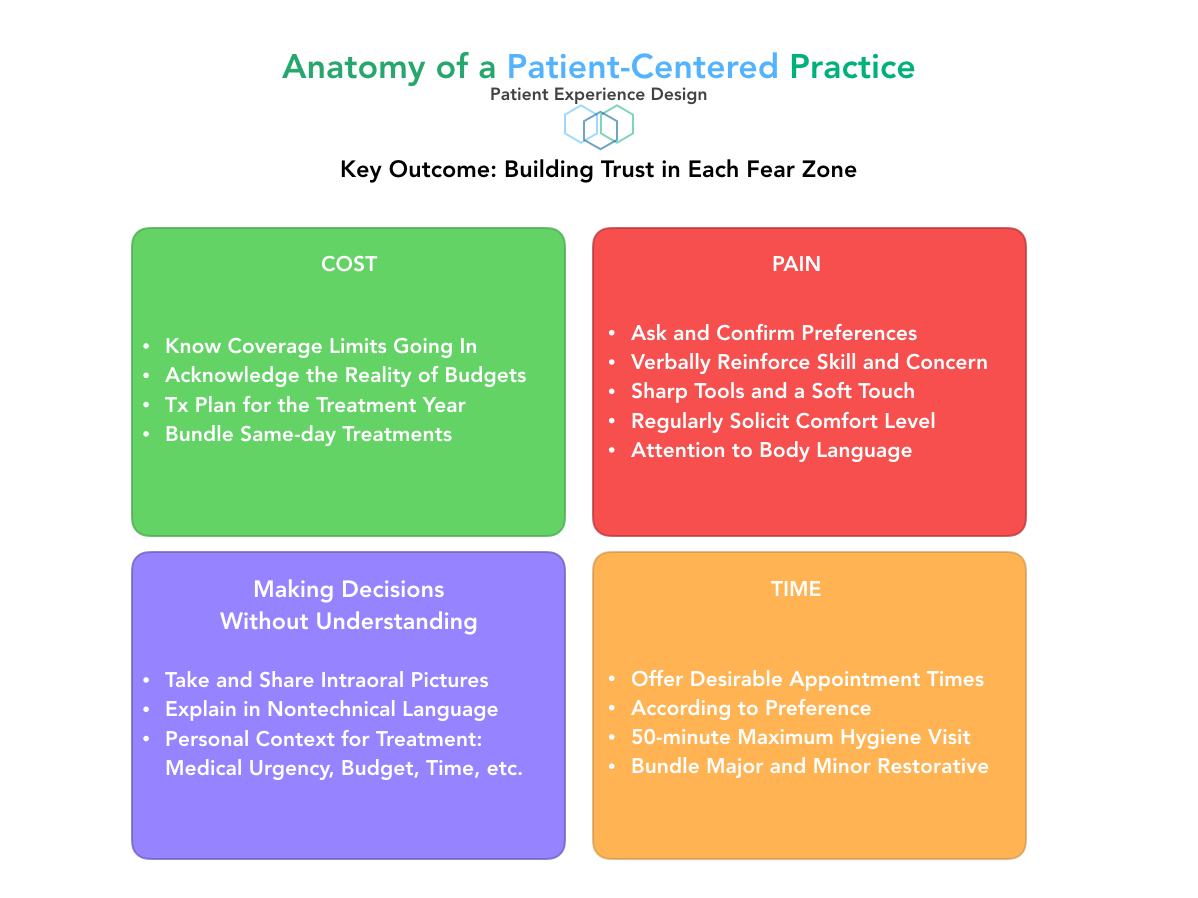
In this segment, Bob discusses the mindset necessary to get your treatment acceptance to the level you’ve always thought was possible. To begin with, it’s all about a focus on care. But that doesn’t mean you need to harp on people. In Bob’s words, don’t forget to diagnose their state of mind first.
Because dentists are so well-trained and, generally speaking, clinically competent, the hard part about treatment acceptance isn’t about fixing their teeth, it’s about understanding that the patient has other needs which must be cared for first.
Take the barriers down. Patients don’t need you to be the all-knowing dentist who will instruct them in the finer points of clinical practice, they need you to be a real person who cares about them.They’ll assume you know what you’re doing if you’re in business, if everyone’s happy to be there and in sync. When the rest of the team is doing a bang-up job to deliver the patient to you already feeling like they are in an environment full of people who know who they are and who care about them, treatment acceptance becomes a matter of building on that trust in your own relationship with the patient, telling them what you see, giving them the options, find out what works for them, and give them what they want in the stages that work for them. Maybe discussions around treatment acceptance become complicated because there are conflicting messages. When a dentist hears that one of their peers has 100% treatment acceptance, for instance, or they attempt to hit an acceptance percentage baseline as part of a financial goal, your goals, while making perfect sense on paper, will come into conflict in practice, where you will quickly be confronted with the fact that in order to truly hit 100% treatment acceptance, or whatever the goal number is, you will have to prioritize making that sale over what the patient really wants. Because the patient won’t get what they want, they will not be happy, and they may not return. In the long run you may find, as Bob has, that showing people the problem areas, presenting the treatment options, and doing what works for the patient results in a lifetime patient. Over their lifetime, you have many more chances to demonstrate that you want what’s best for them. Once that trust is established, they will come to you for their dentistry when it’s time for it. You really don’t need to do anything more than to do what’s best for the patient.