Running an EA Campaign for Root-Cause Analysis, Discovery, and Learning
Methods and Resources for Root Cause Analysis and Designing EA Campaigns
Using EAs to Uncover Constriction Points
You can coordinate the entire team by giving the same EA, assigning the same EA to everyone on each role team, or using different EAs for each individual according to what they need to focus on personally or because of their schedule or unique position.
When it’s possible, strategically assigning EAs can help you and the team discover and understand together where issues and constrictions are with minimal disruption of daily operations. This is a key use of this system and a methodical, constructive way to engage the team in an active growth-mindset.
For example, a campaign to help get patients out on time will take the varied but coordinated efforts of everyone from the front desk to the dentists. You can first assign everyone the Success Hueristic EA “Patient Left on Time” for the first week as a rally EA, allowing the team to self-direct and self-support, discussing their successes and failures and perhaps even triangulating to self-diagnose the constriction point. As mentors and managers get this feedback and compare it to the outcomes of the week’s effort, they then decide to either go another week to help keep the momentum going if the self-direction is all that’s needed, or, if the constrictions seem to require more focused effort, break the campaign into role-specific EAs for the next week or two.
For example, if, after the first week, the issue appears to be a combination of doctors coming into checks late and patients starting late because of unaccounted-for new patient paperwork, but this was discovered only through mentor and manager analysis, relevant EAs would go to the Front Desk and Doctors, and the rest of the team will either continue with the general outcome EA (“Patient Left On-time”), or get another set of EAs relevant to supporting FD and Docs. For instance, Docs and Assistants may discuss the matter and see how the Assistants could help them make checks on time. After getting this feedback, mentors an managers could assign EAs to that effect.
After getting feedback and seeing the results that interval, you will decide whether to continue with shared Full-Role-Team EAs or move into individual EAs in order to fine-tune and provide more personalized coaching.
On the other hand, if no clear pattern is emerging, keep focusing on Full-Role-Team EAs and focus your coaching efforts on getting more feedback from the Team to help you get a sense of what’s happening, who’s using team support, who needs proactive mentor support, and so on. It doesn’t hurt to ask the team about what they think the constriction is from their perspective, as long as this is handled constructively and never leads to using EAs for anything that seems like punishment or reprisal.
The EA approach is about using critical thinking, and acknowledging the practical individual and organization limits of perception, and using experiments to overcome these limits. Any assumptions made are useful only as they contribute to the discovery of useful information, not as conclusions in and of themselves. What you identify as root causes using the 5-Whys are the best answers you have at a given moment, with the information available as limited by your questions. Taking the root cause and sub-causes identified in this exercise and working backward to test the causes of the solution to the issue is a fundamental use of EA campaigns.
Use all of the resources available when you do your assessment.
1. Look at the relevant metrics you gather and try to find patterns. Identify the beginning of the trend if possible. One thing to consider in all cases is overall flow: was the office particularly busy, slow, or irregularly scheduled?
2. Make informal inquiries as you talk to your team. Before you do this, though, write down your best hunch. Then forget about it. Go into this questioning with an open mind so you can respond to what you hear without a stake in one particular answer.
3. Make a list of your hunches and your team’s and consider them together.
4. From this list, identify the patterns and themes. Does one role or the handoff between two roles seem to be consistently identified?
Root Cause Analysis: The Famous“5 Whys” Exercise
The basic process outline for discovering the root cause of issues.
In all cases, take the following steps to translate concern or curiosity into the action phase:
1. Identify the issue. This is what needs to happen or stop happening, needs to be handled differently or be improved, or the area or interaction you want to pay attention to.
2. Ask Why?
3. Consider that answer
4. Ask Why?
5. Loop back to #2 until you get to what seems like the root cause
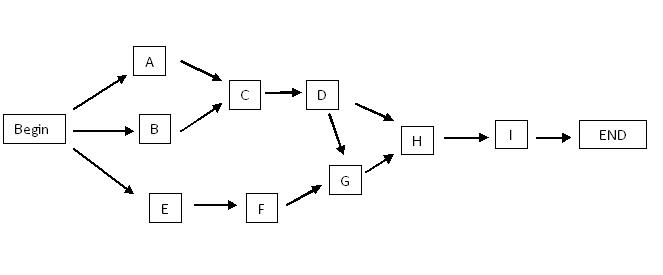
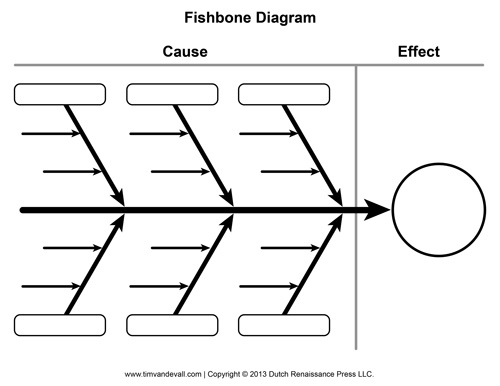
You can use a fishbone diagram or precedence diagram to visualize your findings. Search the Internet for these terms, draw your own, or download the blank versions we've supplied using the download button on the right.
With this analysis in hand, you can now methodically work backward to identify where efforts should be focused.